The ROI of High-Craft UI/UX: Turning Casual Visitors into Loyal Customers
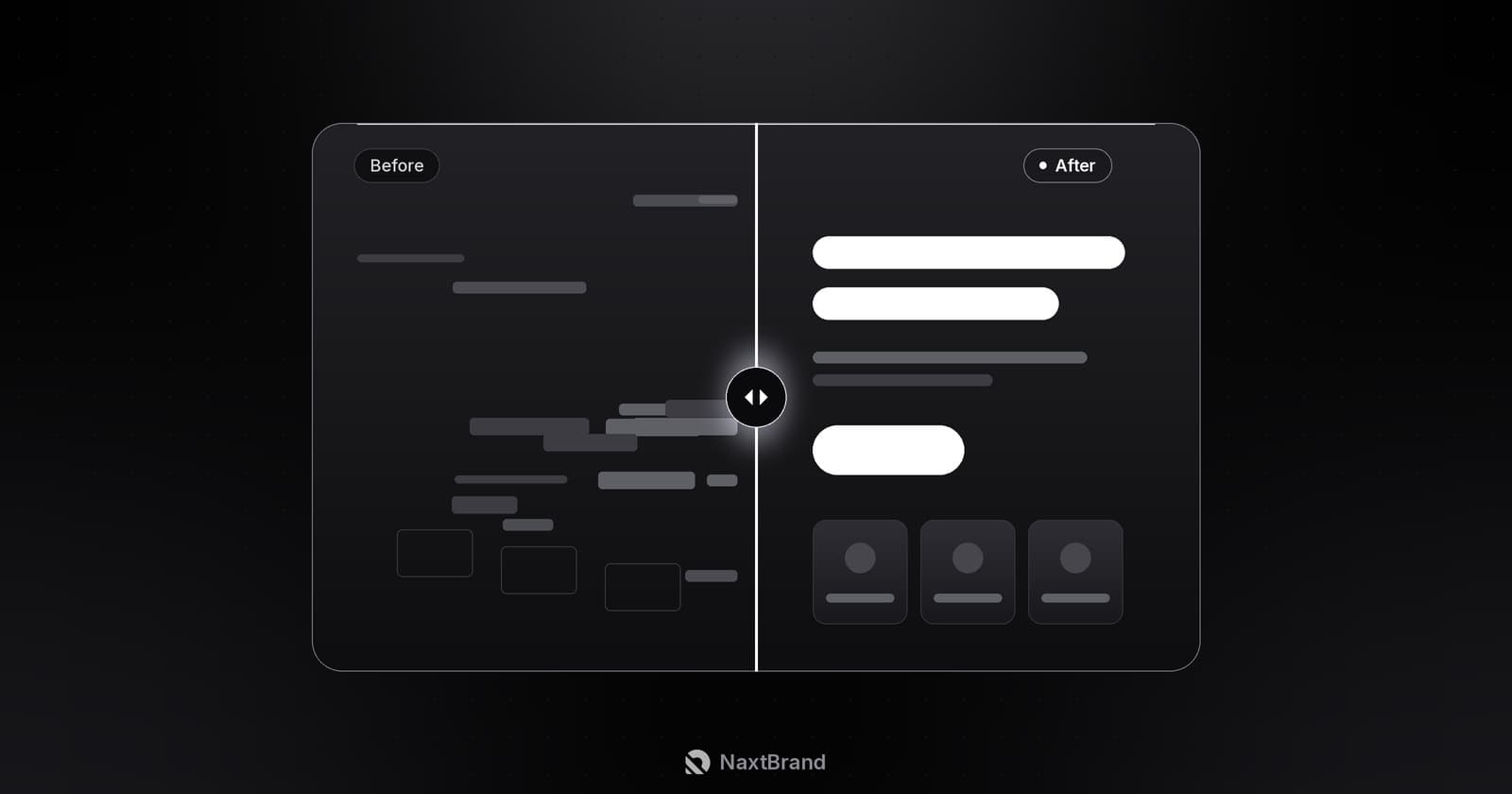
First Impressions Are Formed in 50 Milliseconds
In the digital world, visitors make an instinctive evaluation of your credibility within milliseconds of landing on your page. If the typography feels unrefined, the spacing is inconsistent, or navigation elements are ambiguous, visitors leave before ever reading a single word of your value proposition.
High-craft UI/UX design is not about superficial aesthetics or decorative animations. At NaxtBrand, design is the strategic bridge between human psychology and measurable business outcomes.
"Good design is invisible when it works. It eliminates cognitive friction, answers doubts before they arise, and naturally guides users toward confident decisions."
The True Cost of UX Friction
Every extra click, ambiguous button label, or confusing form field introduces friction. In e-commerce and B2B lead generation, friction directly diminishes your marketing return on ad spend (ROAS):
- Ambiguous Value Propositions: If visitors cannot immediately discern what your product does and who it serves, bounce rates spike.
- Overcomplicated Form Fields: Demanding excessive information on initial contact forms cuts submissions by up to 40%.
- Disjointed Mobile Experiences: With over 60% of modern web traffic originating from mobile devices, a desktop-centric interface alienates more than half of your potential client base.
By focusing on user journey mapping, design systems, and rapid prototyping, our design team solves these friction points early in the development lifecycle. Learn more about how Arisha Mahjabin and our creative team approach brand systems and visual hierarchy.
What Defines "High-Craft" Digital Product Design?
Creating a world-class digital experience requires deep craftsmanship across multiple disciplines:
1. Unified Design Tokens and Typography
We establish clear typographic hierarchies, balanced color spaces, and consistent spacing scales. Every button, input field, and card follows rigorous design tokens that maintain aesthetic harmony across screens.
2. Purposeful Micro-Interactions
Delightful hover states, smooth drawer transitions, and tactile feedback make a web product feel responsive and alive. Micro-animations communicate state changes to the user without overwhelming the visual flow.
3. Frictionless Conversion Architecture
We position calls-to-action (CTAs) at peak moments of user intent. Whether through contextual sticky headers or intuitive bottom-notch navigation, the next step is always crystal clear.
Pairing high-craft interfaces with robust development is essential—discover how design seamlessly transitions into code in our article on Why Modern Web Engineering Matters for Scaling Brands.
Measuring the Business Return of Design
How do we validate that design investments produce tangible ROI? We measure results through hard commercial metrics:
- Lower Customer Acquisition Costs (CAC): High-converting landing pages ensure that every dollar invested in traffic produces maximum pipeline value. Explore this in our deep-dive on Paid Advertising & Funnel Optimization.
- Reduced Customer Support Tickets: Intuitive interfaces and self-explanatory workflows eliminate user confusion, saving your team hours of customer support time.
- Brand Equity and Premium Pricing: Companies with polished, custom design routinely command higher contract values and pricing power than competitors relying on generic templates.
How NaxtBrand Elevates Your Digital Presence
At NaxtBrand, our design team collaborates closely with software engineers, SEO specialists, and marketing analysts. We don’t just deliver static Figma mockups; we craft production-ready design systems tested across real devices and user scenarios.
- Explore our company values, mission, and culture on the About NaxtBrand page.
- Review how we integrate automated lead routing into high-converting forms in AI Workflow Automation: Connecting Systems for Efficiency.
Ready to transform your digital interface into a revenue-generating asset? Schedule a design discovery call with NaxtBrand today.
Quantifying the Direct Financial Return of High-Craft UI/UX
For commercial organizations, investing in high-craft design is not an aesthetic luxury; it is a direct driver of customer acquisition efficiency and software retention:
- Reduction in Customer Support Overhead: By designing intuitive self-serve onboarding flows and unambiguous form validation states, scaling companies reduce customer support ticket volume by up to 40%.
- Acceleration of Developer Implementation Speed: Establishing strict design tokens (spacing scales, color variables, typography hierarchies) in Figma accelerates frontend engineering velocity by 3x, eliminating tedious pixel-pushing during pull request reviews.
- Expansion in Lifetime Customer Value (LTV): Applications that deliver responsive micro-interactions, coherent information architectures, and zero cognitive friction experience significantly lower churn rates among enterprise accounts.
Actionable Design System Checklist for Product Teams
- Audit existing typography and color palettes, consolidating to an 8-point spatial grid system.
- Create reusable component variants in Figma with complete hover, focus, disabled, and error states.
- Test all primary user flows against WCAG 2.1 AA accessibility contrast standards.
- Conduct monthly recorded user testing sessions to observe authentic navigation behavior.