Why Modern Web Engineering & Clean Architecture Matter for Scaling Brands
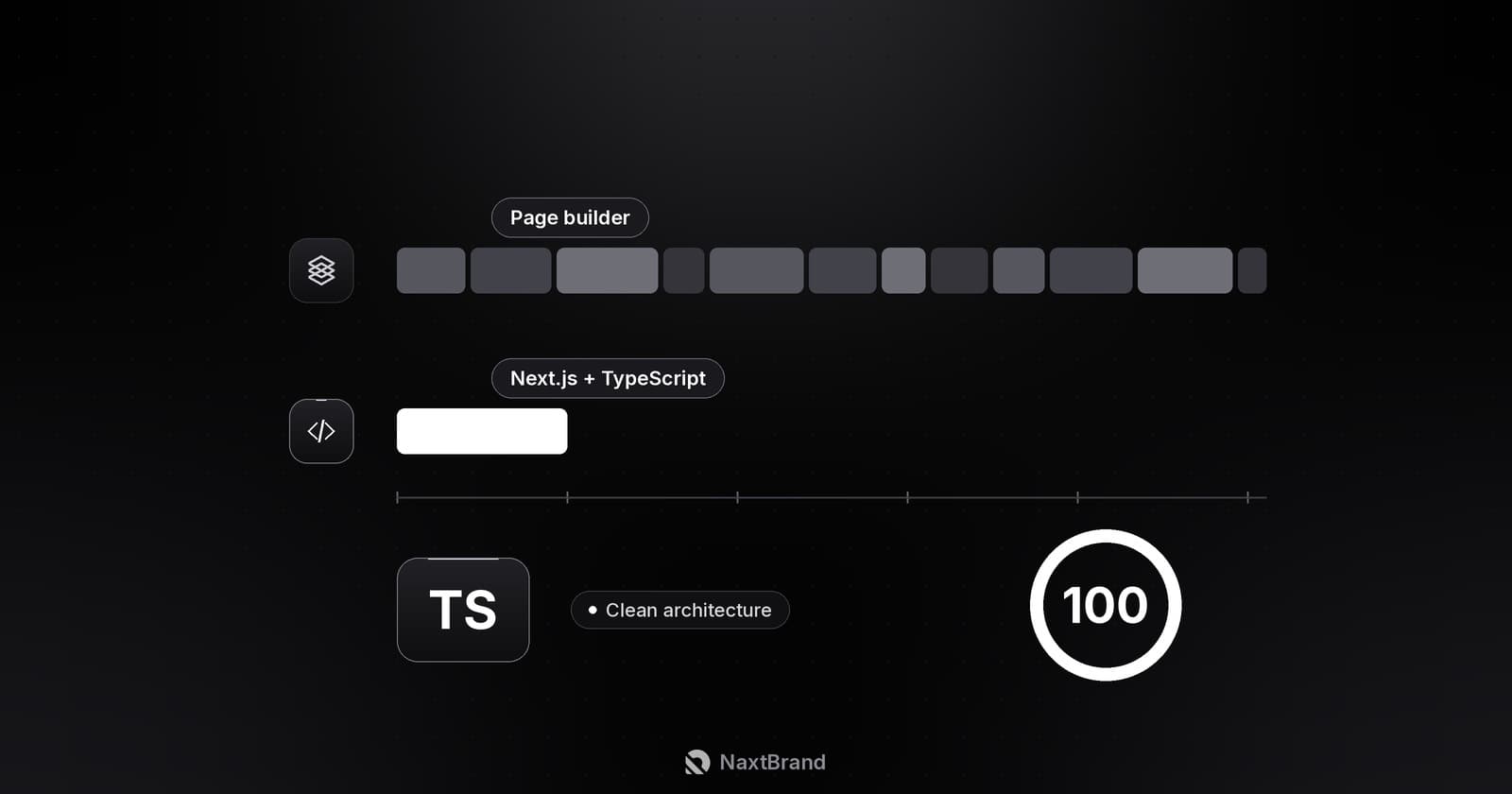
The Strategic Shift in Modern Web Architecture
In the early stages of a business, no-code templates and drag-and-drop page builders often feel like the fastest route to market. However, as an organization scales, customer acquisition expands, and technical requirements compound, these platforms frequently reveal their hidden costs: slow server response times, brittle third-party plugins, security vulnerabilities, and vendor lock-in.
At NaxtBrand, our engineering philosophy is built around a simple principle: your digital platform is your primary commercial asset, not just an electronic brochure.
By building on modern engineering stacks—leveraging Next.js, React, TypeScript, and edge infrastructure—we deliver high-performance digital platforms engineered for blistering speed, uncompromising security, and effortless scalability.
"A website is no longer just a visual presentation. It is the engine of your brand reputation, search authority, and customer acquisition pipeline."
Why Speed Directly Drives Revenue and Conversions
Web performance is not merely a technical vanity metric; it directly determines bottom-line revenue. Research repeatedly shows that every additional second of page load time increases bounce rates by up to 32% and drops conversion rates significantly.
When we engineer web applications at NaxtBrand, our team focuses on:
- Server-Side Rendering (SSR) & Static Generation: Delivering pre-rendered HTML to the browser within milliseconds so your visitors never stare at blank loading screens.
- Optimized Asset Delivery: Dynamic image resizing, modern AVIF/WebP formats, and modern font subsets that drastically shrink data payloads.
- Zero Layout Shifts: Rigorous visual layout stability that eliminates frustrating jumping elements while pages load.
- Edge Deployment: Caching and serving content from geographic nodes nearest to your users across Bangladesh, North America, Europe, and Asia.
When your website loads instantaneously, potential clients perceive your brand as dependable, credible, and state-of-the-art. Discover how our NaxtBrand engineering team designs custom architectures tailored to your exact business specifications.
The Compounding Advantage of Clean Code & Maintainability
One of the most dangerous technical traps for scaling companies is technical debt. When systems are built hastily using bloated third-party themes, introducing a new feature or integrating an external CRM often breaks existing functionality.
Clean architecture solves this by enforcing:
- Modular Component Systems: UI components built with clear boundaries, reusability, and TypeScript type safety.
- Predictable State Management: Data flows in an organized, inspectable manner, preventing subtle bugs and memory leaks.
- Decoupled API Integrations: Webhooks, payment gateways, and databases connect through structured service layers, making future migrations seamless.
These engineering standards ensure that when your marketing team decides to launch a new campaign or your operations team adds a new workflow, your engineering team can deliver updates in days rather than months.
How Technical Excellence Powers Search and Discovery
Search engines increasingly evaluate user experience alongside content quality. Core Web Vitals—specifically Largest Contentful Paint (LCP), Interaction to Next Paint (INP), and Cumulative Layout Shift (CLS)—are verified ranking signals used by Google.
A custom Next.js web application provides near-perfect Lighthouse performance scores out of the box. Coupled with semantic HTML structure and automated JSON-LD schema markup, search crawlers can parse and index your pages effortlessly.
For a deeper dive into optimizing search visibility, explore our comprehensive guide on Technical SEO & Core Web Vitals for Modern Websites.
Connecting Engineering with Design and Growth
Software engineering cannot exist in a vacuum. A lightning-fast web product only succeeds when combined with world-class user interface design and clear conversion funnels.
That is why NaxtBrand pairs our engineering team directly with product designers and growth strategists:
- Pair your technical infrastructure with intuitive, high-converting interfaces explored in The ROI of High-Craft UI/UX Design.
- Connect customer intake forms to automated pipelines discussed in our guide on AI Workflow Automation for Modern Businesses.
- Learn more about our multidisciplinary team and corporate journey on our About NaxtBrand page.
Build Your Next Digital Advantage with NaxtBrand
Whether you are launching a modern enterprise website, migrating away from an obsolete CMS, or building a bespoke SaaS web application, choosing the right engineering partner defines your growth trajectory for years to come.
Ready to architect a high-performance web experience? Schedule a technical discovery session with NaxtBrand to discuss your project requirements and roadmap.
Architectural Comparison: Modern Web Engineering vs Legacy CMS
Scaling brands must transition away from legacy monolithic CMS architectures that accumulate security debt and degrade performance:
Key Performance Indicators for Modern Web Platforms
To evaluate whether your digital infrastructure supports your commercial scaling objectives, monitor these core KPIs:
- Time to First Byte (TTFB): Maintain sub-200ms TTFB across all target geographic regions by deploying to global edge CDNs.
- Conversion Rate by Device: Ensure mobile conversion rates track within 80% of desktop performance by optimizing viewport layout stability.
- Deployment Frequency: Engineering squads should be capable of deploying updates multiple times daily with automated CI/CD checks and zero downtime.